Macau Nezha 寺庙: Shishan’s Historic Folk Shrine 与 Visitor 指南
Temples & Religious Buildings
Macau Nezha 寺庙: Shishan’s Historic Folk Shrine 与 Visitor 指南的行程重点、背景信息和实用参观提示,帮助旅行者更轻松地规划中国之行。
中文导览:Shishan Nezha Temple, Macau — Historic Folk Shrine
中文导览:Introduction: One Temple, One Legend
中文导览:Nestled on the slopes of Shishan (Fort Hill) on the Macau Peninsula, the Shishan Nezha Temple is a quietly weathered sanctuary with centuries of local devotion. As one of Macau’s oldest Nezha temples, it blends Taoist belief and popular folk worship, offering visitors a peaceful glimpse into the city’s cultural fusion of Chinese tradition and colonial-era history.
中文导览:1. History and Cultural Status: A Centuries‑Old Protector of Macau
中文导览:The Shishan Nezha Temple dates back to the late Ming or early Qing period (exact year unknown) and has stood for hundreds of years. Beyond its religious role, the temple once formed part of local defensive structures and witnessed Macau’s transformation from a fishing village to an international port.
中文导览:Nezha Belief and Macau Culture
中文导览:Nezha (the Third Prince) is a youthful deity in Chinese folk religion, famed for subduing demons and danger. In Macau, Nezha worship is particularly vibrant. Local tradition holds that the temple was established to suppress harmful ‘‘fire‑evil’’ energies and to protect residents. Today the temple is recognized as a protected cultural site and remains an important symbol of faith among Macau’s Chinese communities.
中文导览:2. Architecture and Artistic Highlights: Humble Yet Refined Folk Craftsmanship
中文导览:Architecture: A Classic Lingnan Temple Style
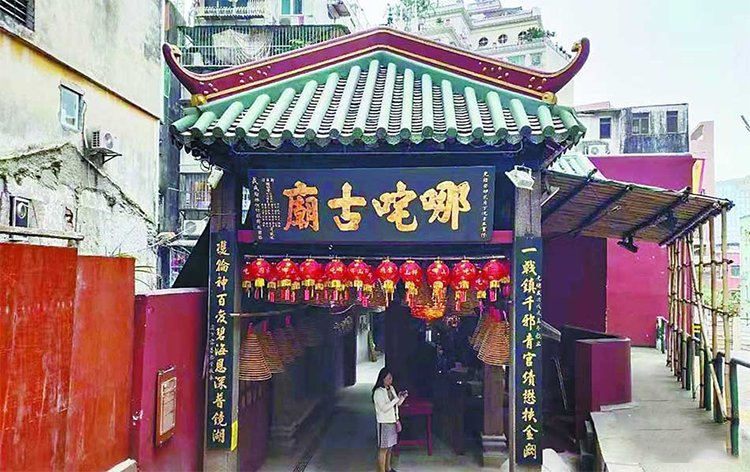
中文导览:Built into the hillside, the temple follows a single‑bay gable roof layout with grey brick walls and glazed tile roofing. The simple, dignified façade is crowned by a wooden plaque bearing the bold characters “Nezha Ancient Temple,” hinting at its historical depth.
中文导览:Interior Space: Sacred Atmosphere Amid Incense
中文导览:Inside, the main hall enshrines Nezha’s statue, flanked by mural paintings that illustrate mythic episodes. The woodcarvings and stonework display fine folk craftsmanship. The temple also preserves Qing‑era artifacts, including a bronze bell and incense burners from the Guangxu years, each object narrating its own piece of history.
中文导览:3. Religious Events and Immersive Experiences: Macau’s Living Folk Traditions
中文导览:Nezha Birthday Procession: A Listed Intangible Cultural Heritage
中文导览:Every lunar May 18—Nezha’s birthday—the temple hosts an exuberant Nezha birthday procession, included in Macau’s intangible cultural heritage list. Devotees parade the statue through streets to beating drums, lion dances, and festive crowds. If you visit during this festival, you’ll witness one of Macau’s most colorful folk events.
中文导览:Participating in Rituals: How to Offer Incense and Respect
中文导览:– Offering incense: Purchase three sticks and light them—representing respect for heaven, earth, and the gods. Place them calmly in the censer. 中文导览:– Lighting lamps: Some devotees light oil lamps or candles as wishes for brightness and blessings. 中文导览:– Donation: A merit box is available for voluntary offerings; amounts are at your discretion.
中文导览:Note: Please remain quiet and respectful during ceremonies, and avoid disrupting worshippers.
中文导览:
中文导览:4. Setting and Atmosphere: A Tranquil Hilltop Sanctuary
中文导览:Perched on Fort Hill’s slopes, the temple is surrounded by trees and removed from major traffic. It’s frequented mostly by local worshippers and a few cultural visitors, creating a calm, contemplative atmosphere. From the temple entrance you can also catch partial views over Macau’s cityscape — a gentle reminder of the city’s layered history.
中文导览:5. Visit Planning: How to Make the Most of Your Stop
中文导览:Suggested Visit Duration
中文导览:– Quick visit: 30–60 minutes (for travelers on a tight schedule). 中文导览:– In‑depth experience: 1–2 hours (for those interested in rituals, photography, or local history).
中文导览:Best Visit Themes
中文导览:Cultural exploration, quiet reflection, folk photography, learning about Macau’s local beliefs.
中文导览:Combination Suggestions
中文导览:Pair this stop with nearby attractions such as the Ruins of St. Paul’s (Big Taipa Arch), Macau Museum, and Fortaleza do Monte for a half‑day cultural itinerary. For food, head to the bustling Avenida de Almeida Ribeiro (San Ma Lo) to sample local snacks like Portuguese egg tarts and pork chop buns.
中文导览:6. Practical Tips: What to Know Before You Go
中文导览:Basic Information
中文导览:– Name: Shishan Nezha Temple 中文导览:– Address: Slope of Shishan (Fort Hill), Macau Peninsula 中文导览:– Opening hours: Generally 08:00–18:00 (hours may vary; check ahead) 中文导览:– Admission: Free
中文导览:Getting There
中文导览:– Public transport: Take a bus to Shuikengmei Stop or Ruins of St. Paul’s stop, then walk about 10–15 minutes. 中文导览:– Taxi/private car: Parking is limited; taxis are recommended. Search for “Shishan Nezha Temple” on maps.
中文导览:
中文导览:Visitor Etiquette
中文导览:– Dress: No strict dress code, but avoid overly revealing clothing. 中文导览:– Photography: Photos are allowed, but avoid using flash during rituals or pointed shots of worshippers. 中文导览:– Language: Most signage is Chinese; some English explanations may be available. 中文导览:– Payments: Incense and donations usually require cash (MOP or HKD).
中文导览:Conclusion: A Temple, a City’s Memory
中文导览:Shishan Nezha Temple is more than a religious site — it’s a living witness to Macau’s cultural blending. Here you can sense the sincerity of local faith and touch centuries of local memory. If you’re drawn to Macau’s history and traditions, include this serene hilltop shrine on your itinerary.
中文导览:Travel tip: Visit early morning or late afternoon to avoid crowds and fully absorb the temple’s tranquil atmosphere.
https://chinawondersguide.com/zh-Hans/macau-nezha-temple-shishan-guide/